

Disclaimer: The information on our website is provided for general information purposes only. We make no representations or warranties of any kind, express or implied, about the completeness, accuracy, reliability, suitability or availability with respect to the website or the information contained on our website for any purpose. Any reliance on such information is therefore strictly at your own risk and we are not liable for any damages or losses arising out of or resulting from your reliance on any information contained on our website.
We’ve all heard the same story for years – young people grow up, get educated, and move to a big city to chase their careers. But is that still the norm?
Recently, we ran a survey with over 4,000 young adults across the U.S., especially those from smaller towns and rural areas.
The goal was simple: find out whether the big-city dream still holds up in 2025, or whether remote work, rising living costs, and changing priorities are turning that dream on its head.
The results were pretty eye-opening. A growing number of young people are rethinking what success looks like, and it’s no longer tied to skyscrapers or office commutes.
Below are a few things that stood out when we dug deeper into the data, beyond the headlines.
Key Findings
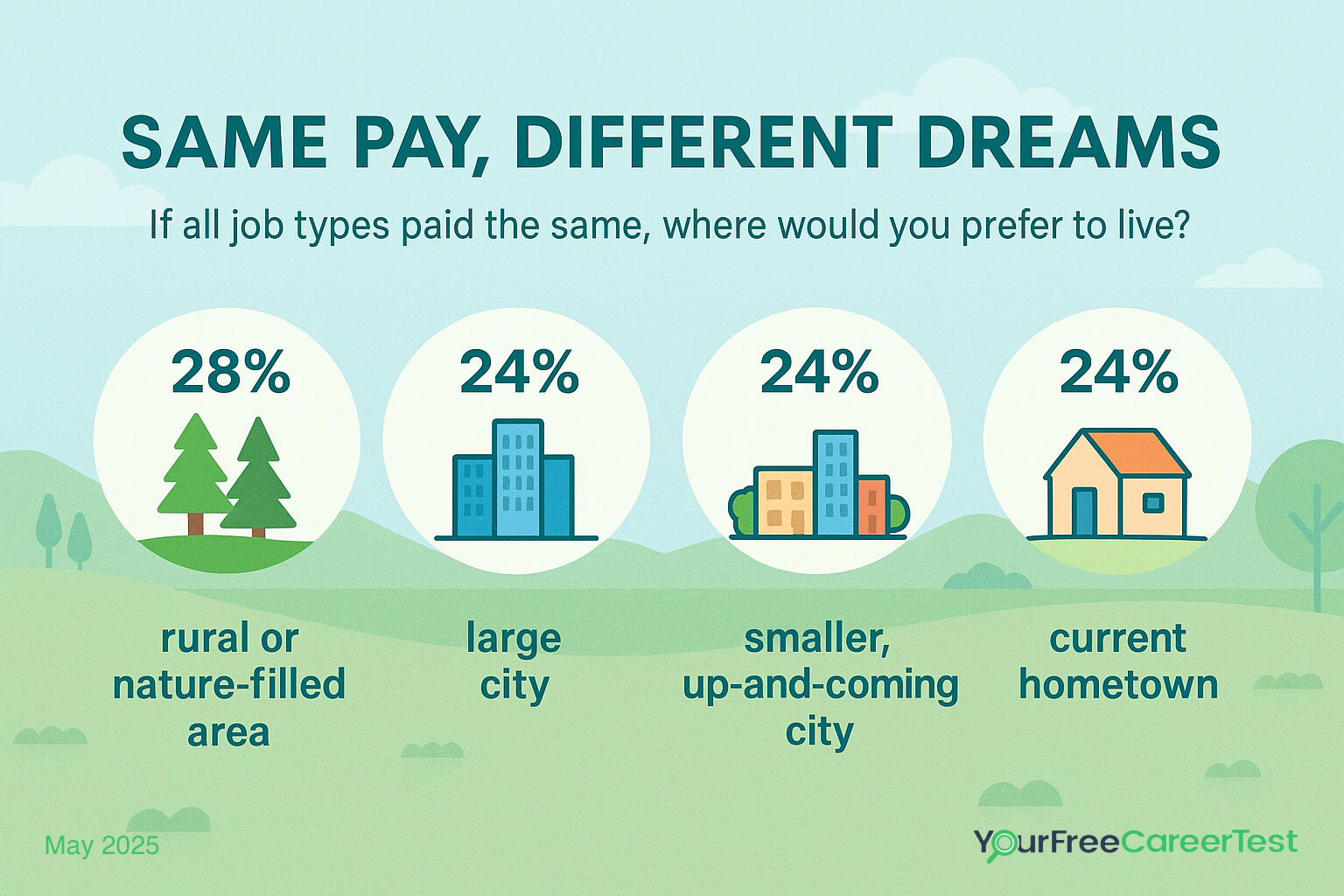
Not just rural pride – it’s a lifestyle choice.
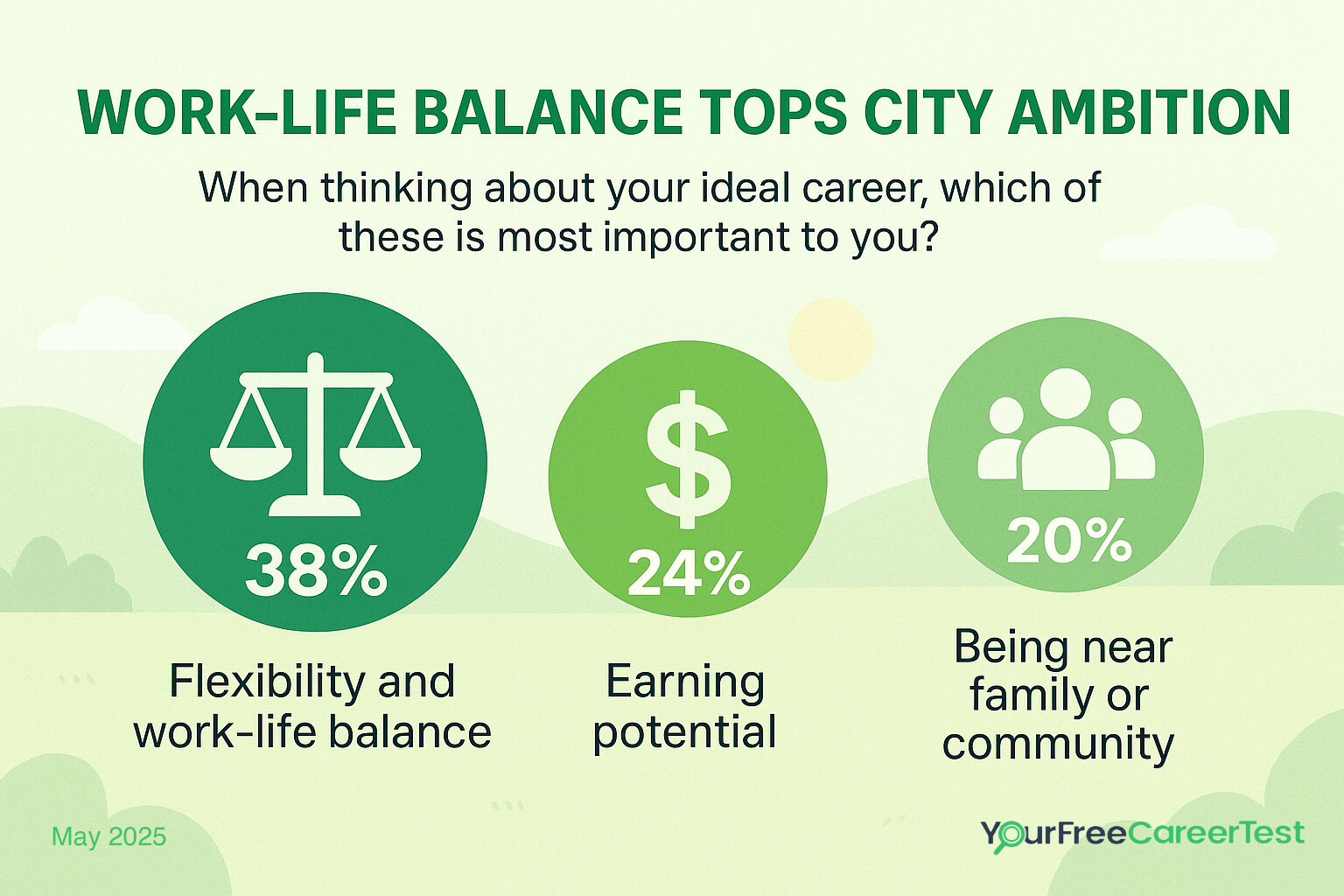
The most striking responses came from Iowa, Mississippi, and New Mexico, where three out of four young people or more say they want to stay put.
That’s not just about lacking opportunity elsewhere. It points to a rebalancing of values. Quality of life, cost of living, and a sense of belonging clearly outweigh the old urge to “make it in the city.”
States with a strong cultural identity lean local.
States with a distinct regional identity – think Arkansas, Georgia, Kansas, and Louisiana – all had more than 70% of respondents saying they’d rather not move to a big city.
Pride in place might be playing a bigger role than we assume, especially in places where local companies are seen as both successful and rooted in the community.
Middle-ground states are in flux.
Maine, Massachusetts, Rhode Island, Tennessee, and West Virginia all landed at exactly 50/50.
That suggests a tug-of-war happening internally: young people in these states seem equally drawn to staying local as they are to leaving. These could be swing states in the future of workplace geography.
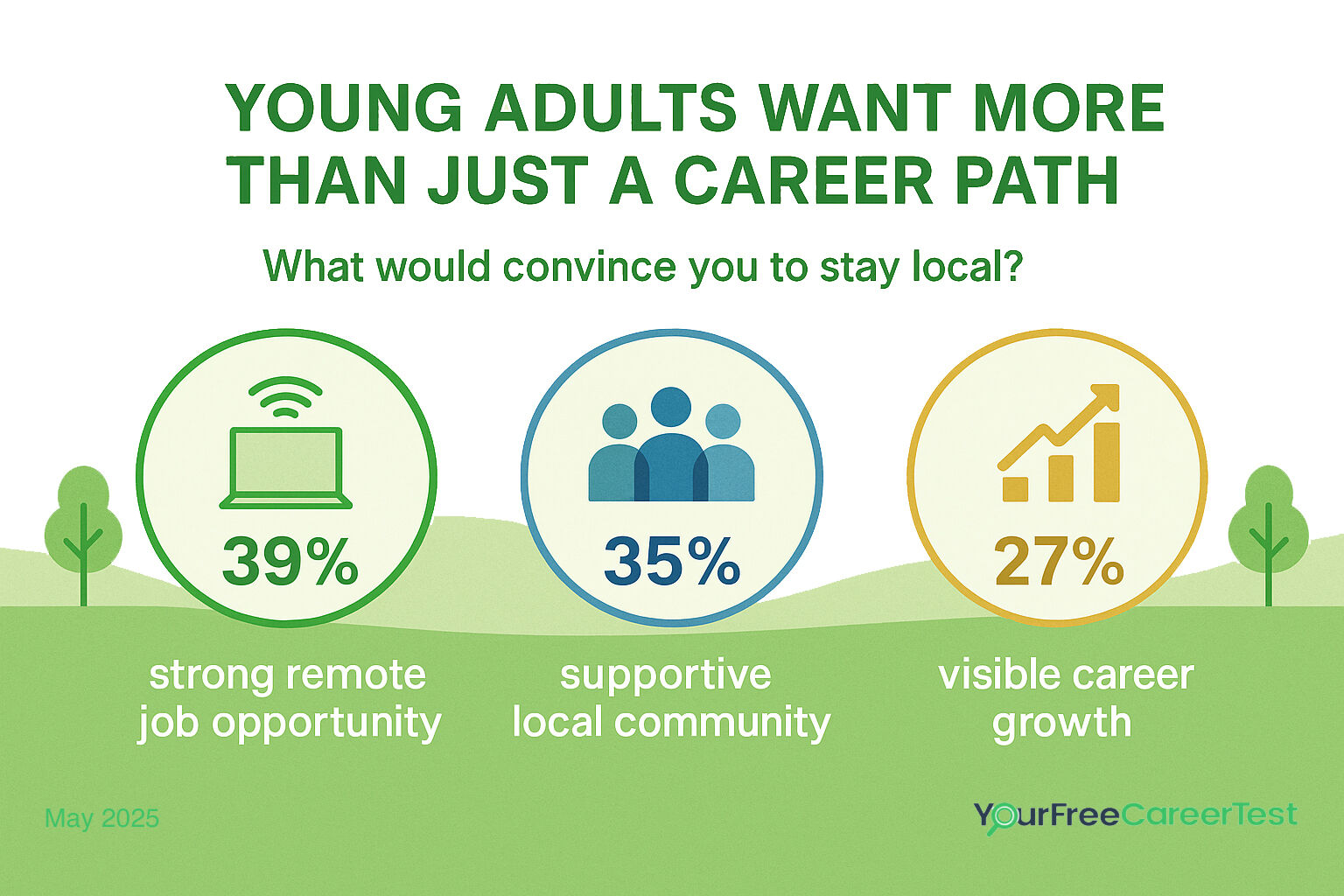
Remote work has democratized ambition.

A powerful theme cutting across the data: ambition hasn’t gone away – it’s just been localized.
Young professionals still want leadership roles and creative challenges, but they increasingly want to achieve those goals without leaving their hometowns or giving up their personal lives.
Small-town success is no longer “settling”.
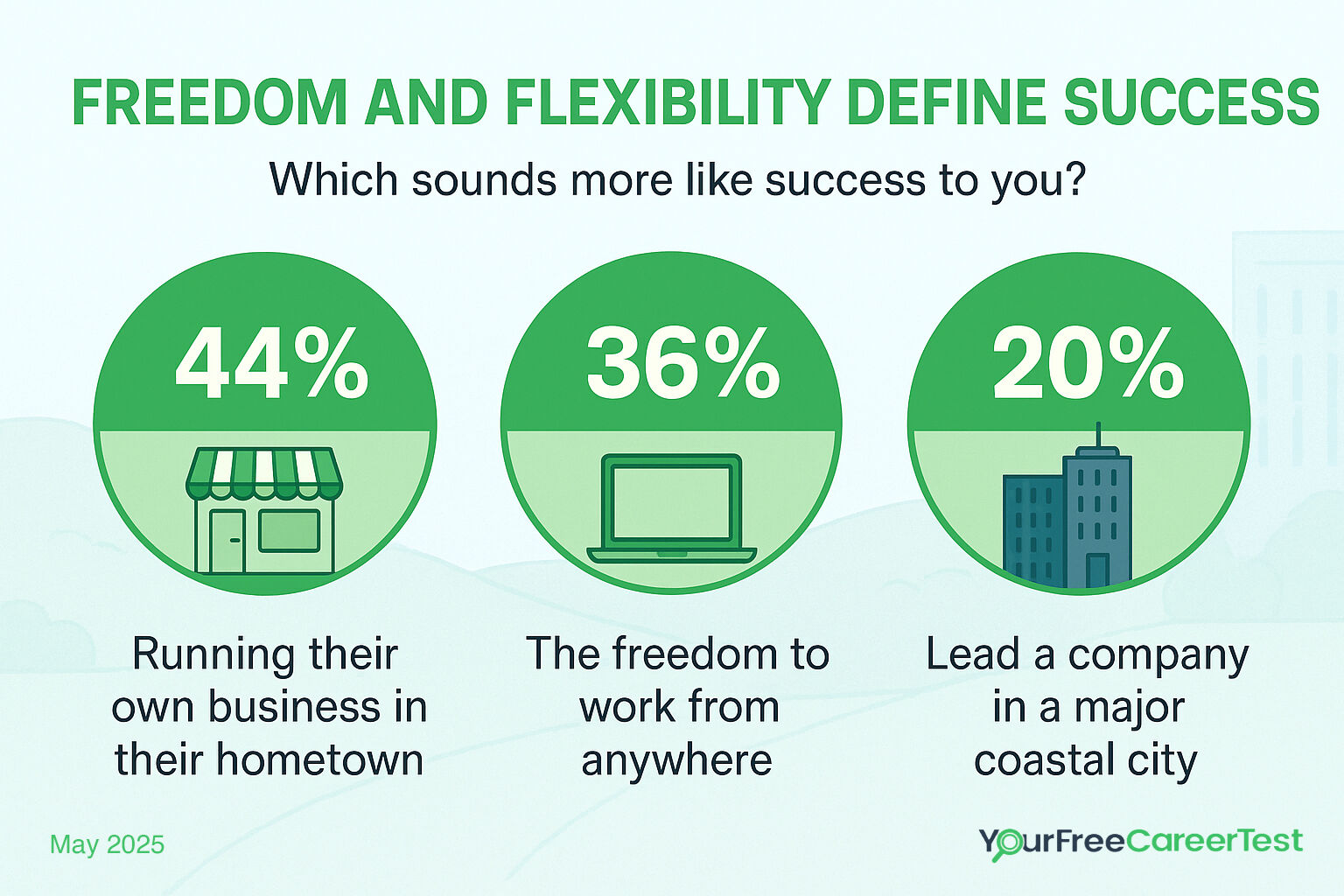
A significant 44% of respondents say they’d rather run their own thing in their hometown than lead a company in a major city. It reframes success as something personal and flexible, not just powerful and prestigious.
The Midwest isn’t monolithic.
While Iowa led the charge in wanting to stay local, Indiana (76%), Illinois (74%), and Nebraska (75%) were among the most eager to leave.
It shows that even within a region often lumped together, young people’s views are far from uniform. It could come down to local industry strength, or lack thereof.
Virginia stands alone
Virginia had the most lopsided result: 80% still think big-city life is the best route for career growth. That makes it a fascinating outlier.
Could proximity to D.C., or the strength of urban job markets in places like Arlington and Richmond, be driving that sentiment?
Company loyalty has gone hyperlocal.
When asked what company they’d like to lead, many young people named employers based in their state. John Deere, Tyson Foods, Butterball – these aren’t the darlings of Silicon Valley, but they represent stability, familiarity, and relevance.
It’s a quiet but clear rejection of the idea that “success” only happens in glass towers.
Dream aspirations
In an additional survey, we also quizzed over 3,000 recent graduates, asking:
“If you could be CEO of any company, which one would it be?”
The answers were telling.
Yes, big names like Google, Amazon, and JPMorgan still showed up – as you’d expect – but so did some curveballs: Dick’s Sporting Goods, MGM Resorts, even the University of Texas.
A lot of respondents chose companies that felt personally meaningful or tied to their region, not just the ones topping the stock market.
It wasn’t just about where people want to end up – it was about how they want to lead.
The most valued CEO traits weren’t flashy. Graduates pointed to strong people management, clear vision, and ethical decision-making as the top markers of great leadership.
And maybe the biggest surprise?
When asked whether they’d rather run a major Fortune 500 company or build something of their own from scratch, the split was nearly 50/50.
That says a lot about how ambition is evolving: it’s still there, but it’s less about corner offices and more about control, values, and the kind of work-life balance that doesn’t burn you out by 35.
Final Thoughts
This isn’t just a shift in geography – it’s a shift in mindset. For young people across the country, the future of work isn’t about where you go, but how you build.
The ambition is still there, but it’s wearing a different outfit: one that fits better, lives closer, and takes weekends off.
Whether this trend holds will depend on how well remote work keeps up with expectations – and how much local economies step up to meet the moment.
Methodology
Online panel survey of 4,051 adults ages 18-25. We used a two-step process to ensure representativeness through stratified sampling and post-stratification weighting.
Respondents are carefully chosen from a geographically representative online panel of double-opt-in members. This selection is further tailored to meet the precise criteria required for each unique survey. Throughout the survey, we designed questions to carefully screen and authenticate respondents, guaranteeing the alignment of the survey with the ideal participants.
To ensure the integrity of our data collection, we employ an array of data quality methods. Alongside conventional measures like digital fingerprinting, bot checks, geo-verification, and speeding detection, etc. each response undergoes a thorough review by a dedicated team member to ensure quality and contextual accuracy. Our commitment extends to open-ended responses, subjecting them to scrutiny for gibberish answers and plagiarism detection.